
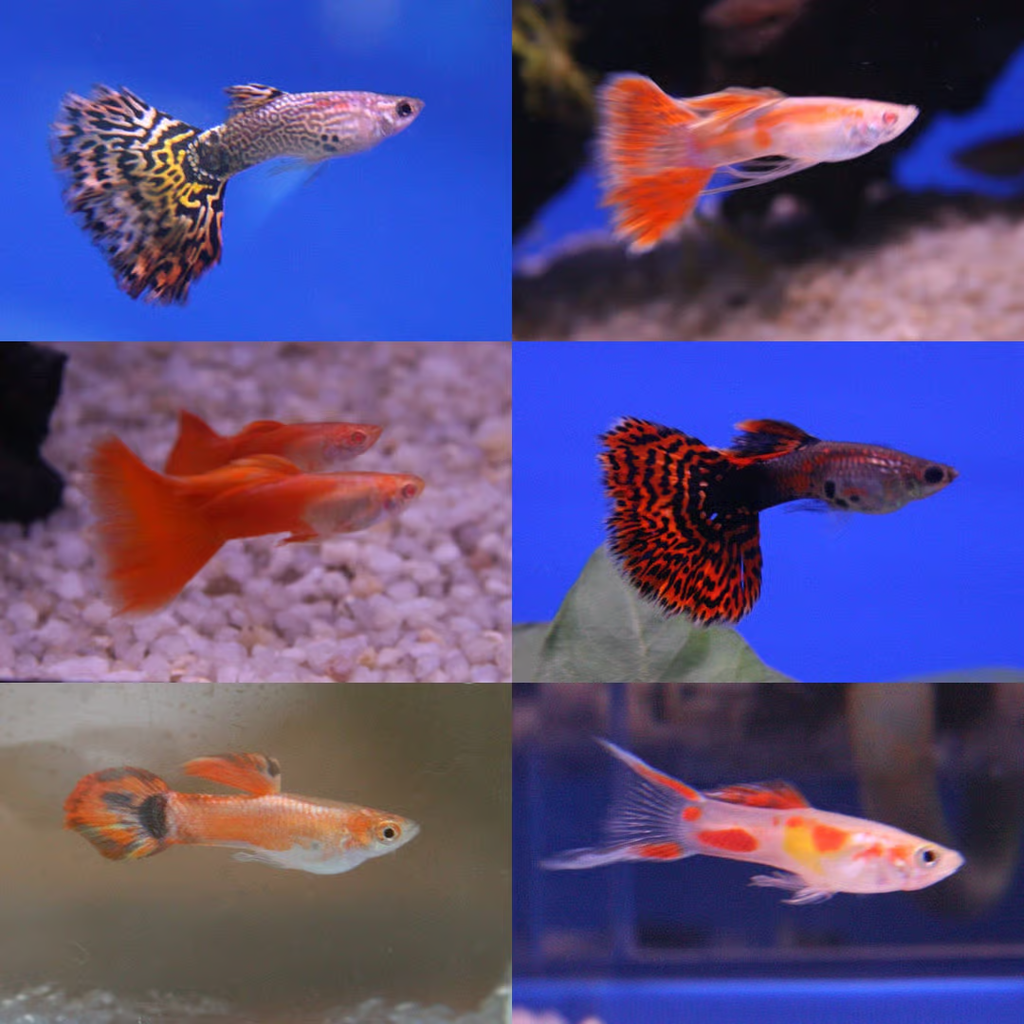
Guppy fish are small, colorful, and surprisingly versatile. Put a group of them in an aquarium and it can quickly feel like someone has dropped a handful of living confetti into the water. Their bright tails, energetic swimming, and endless combinations of colors have made guppies one of the most recognizable freshwater aquarium fish in the world.
For aquarium businesses, however, guppies are more than just attractive fish. They are also an interesting product category because the market includes many different strains, patterns, sizes, and quality levels. A beginner may simply ask for “guppies,” while an experienced hobbyist may be looking for a very specific color pattern or tail shape.
That variety is one of the reasons guppy fish remain popular with importers, wholesalers, chain stores, and large retailers. There is something for almost every type of customer, from someone buying their first aquarium fish to an experienced hobbyist searching for a particular strain.
Understanding the different types, colors, and factors that influence guppy prices can therefore be useful when planning a commercial freshwater fish selection.
What Makes Guppy Fish So Popular?
The guppy, scientifically known as Poecilia reticulata, is a livebearing freshwater fish originally associated with parts of northern South America and nearby regions. Today, guppies are kept and bred in many countries and are available in an enormous range of appearances.
One reason for their popularity is their size. Guppies are relatively small, making them suitable for a variety of aquarium setups. They are also active fish that can bring movement and color into a community aquarium.
Then there is their appearance.
Male guppies are usually the stars of the show. Selective breeding has produced strains with elaborate tails, metallic bodies, vibrant colors, and distinctive patterns. Females are generally larger and less colorful, although they can still have attractive markings.
For retailers, this creates an opportunity to offer different guppy categories at different price points rather than treating every guppy as the same product.
Popular Types of Guppy Fish
There is no single official list of every guppy “type” because breeders and hobbyists often use strain names based on color, pattern, tail shape, or a combination of traits.
Some names describe the tail, while others describe the body coloration or pattern.
Fancy Guppy
Fancy guppies are among the most common varieties found in the ornamental fish trade. They are selectively bred for attractive colors, patterns, and fin shapes.
A fancy guppy may have a large flowing tail with a combination of red, blue, yellow, orange, black, or other colors. Some have metallic-looking bodies, while others display intricate patterns across their tails.
The term “fancy” is broad, so two fish sold as fancy guppies can look completely different from one another.
Endler Guppy
Endler guppies are another popular option among aquarium enthusiasts. They are associated with Poecilia wingei, although the history and classification of Endler-type guppies can be more complicated than the simple name suggests.
Compared with many fancy guppies, Endlers are often smaller and have a more compact appearance. Males can display vivid combinations of orange, green, blue, black, and metallic shades.
Their smaller size and active behavior make them particularly appealing to hobbyists who enjoy nano or planted aquariums.
Moscow Guppy
Moscow guppies are known for their strong body coloration, often extending across much of the fish rather than appearing only on the tail.
Blue Moscow guppies are especially recognizable, with deep blue or bluish metallic coloration. Other Moscow strains may display black, green, or other shades.
These fish can be visually impressive under aquarium lighting, making them attractive options for customers interested in solid-color or metallic-looking guppies.
Cobra Guppy
Cobra guppies are named for their distinctive body and tail patterns, which can resemble the markings associated with a snake.
The pattern may appear in different color combinations, so the term “cobra” does not refer to just one exact appearance.
For stores, patterned strains such as these can add visual variety to a guppy display and give customers more choices than basic solid-color varieties.
Tuxedo Guppy
Tuxedo guppies generally have a darker section toward the rear half of the body, creating a contrast between the front and back portions of the fish.
This contrast can be combined with different tail colors, producing many variations. The result is a guppy that looks as though it has arrived at the aquarium wearing a tiny formal suit.
Dumbo Ear Guppy
Dumbo ear guppies are recognizable by their enlarged pectoral fins, which extend outward from the sides of the body.
These fins can create an unusual swimming appearance and make the fish easy to distinguish from standard guppy strains. Depending on the breeding line, dumbo ear guppies can also display different body and tail colors.
For retailers, unusual physical characteristics like this can be useful when creating a specialty section for customers looking for something beyond traditional guppy varieties.
Guppy Colors and Patterns
One of the biggest attractions of guppy fish is their enormous color range.
Red guppies are popular because of their strong and easily recognizable coloration. Depending on the strain, the red may cover the tail, body, or both.
Blue guppies can range from light blue to deep metallic shades. Blue coloration can look especially striking under suitable aquarium lighting.
Yellow and gold guppies offer a brighter appearance and can stand out against green plants or darker backgrounds.
Black guppies are often appreciated for their dramatic appearance. Depending on the strain, the coloration may be concentrated on the tail or cover a large portion of the body.
There are also multicolor guppies combining several shades. These can include combinations such as red and blue, yellow and black, orange and blue, or many other variations.
Patterns add another layer of diversity. Mosaic, snakeskin, cobra, tuxedo, and other descriptive names are commonly used by breeders and hobbyists to distinguish different appearances.
This is why customers searching for a specific guppy fish type may have a very particular image in mind. Two guppies of similar size can have completely different commercial appeal depending on their strain and quality.
What Determines Guppy Fish Prices?
One of the most common questions from buyers is simple: how much do guppy fish cost?
The honest answer is that there is no universal price.
Guppy prices can vary significantly depending on several factors. Strain is one of the biggest considerations. Common varieties are generally more accessible, while specialized or selectively bred strains can command higher prices.
Color and pattern also matter. A rare or desirable combination may be valued differently from a common coloration.
Tail shape is another factor. Guppies with large, well-developed, symmetrical tails can be more valuable in markets where ornamental quality is important.
Size and age can also influence pricing. Buyers may prefer particular sizes depending on whether they are stocking retail aquariums, breeding programs, or display systems.
Quality and consistency are particularly important for commercial buyers. A retailer purchasing a large quantity of fish usually needs more than attractive individual specimens. They need reasonably consistent quality across the shipment.
Market location also plays a role. Prices can differ between countries and even between individual retailers because of transportation, import requirements, local demand, availability, and operating costs.
For that reason, it is better for importers and wholesalers to evaluate guppy prices based on the complete sourcing package rather than focusing only on the initial per-fish figure.
Why Guppies Work Well for Commercial Markets
Guppies have several characteristics that make them appealing to the ornamental fish trade.
Their small size allows businesses to transport and display them efficiently. Their visual diversity means a retailer can stock multiple strains while still remaining within the same general product category.
They are also familiar to aquarium customers. Someone who has never kept tropical fish before may already recognize a guppy from a local aquarium shop, school project, or home aquarium.
At the same time, experienced hobbyists can become interested in increasingly specialized strains.
This creates a useful customer journey. A beginner might start with a few colorful guppies, discover different strains, and eventually become interested in selective breeding or more specialized varieties.
For importers and wholesalers, maintaining a diverse selection can therefore help serve multiple levels of the aquarium market.
Buying Guppies for Import and Wholesale
Commercial buyers should look at more than color when selecting guppies.
First, consider the consistency of the fish. If a retailer orders a particular strain, the shipment should match the agreed specifications as closely as possible.
Second, ask about packing procedures. Live fish transportation requires careful preparation because water quality, temperature, oxygen, and transit duration can affect fish condition.
Third, consider documentation and export procedures. International live fish shipments can involve paperwork and logistical requirements that are easier to manage when an experienced export partner handles the process.
This is where a specialized ornamental fish exporter can provide value.
Aquazone Indonesia is an ornamental fish breeder and exporter supplying more than 500 varieties of ornamental fish to aquarium markets worldwide. For businesses searching for the best fish exporter in indonesia, the company offers services designed around the needs of international buyers.
Aquazone provides personalized consultation to help customers choose fish that fit their target market. This can be particularly useful when an importer is deciding which guppy strains or other freshwater species to add to an existing product range.
The company also offers all-in-one export management, including paperwork and shipping coordination. Instead of having buyers manage every part of the export process separately, these responsibilities can be handled as part of the service.
Professional packing and handling are another important part of the process. Each shipment is prepared with attention to fish welfare and water-quality control to help support safe transportation.
Aquazone also provides post-delivery support. Buyers can report issues within 24 hours, with replacement support available according to the company’s terms.
Most importantly for businesses that depend on repeat orders, Aquazone emphasizes long-term partnerships built around trust, quality, and consistency.
Choosing the Right Guppy Selection
For a retailer, the ideal guppy collection does not necessarily need to include every possible strain.
A more practical approach is to create a balanced selection.
Popular colors such as red, blue, yellow, and black can appeal to general customers. Patterned strains can attract hobbyists looking for something more distinctive. Specialty varieties can provide an additional option for experienced customers.
The exact combination depends on the target market.
A large retail chain may prioritize recognizable varieties with broad customer appeal. A specialist aquarium store may be more interested in unusual strains and higher-grade specimens. A wholesaler may need a mixture that can be distributed across several types of retail outlets.
Understanding these differences can help buyers make more informed stocking decisions.
More Than Just a Colorful Little Fish
Guppies may be small, but the world surrounding them is surprisingly large. From fancy guppies and Endlers to Moscow, cobra, tuxedo, and dumbo ear varieties, there are countless combinations of colors, patterns, and physical traits.
Their prices can be just as varied. Instead of having one fixed value, guppies occupy a broad range depending on strain, quality, size, availability, market demand, and sourcing conditions.
For importers, wholesalers, chain stores, and large retailers, understanding these differences is useful when building a freshwater fish portfolio.
The next time a customer points at a colorful guppy and asks, “How much is that one?”, there may be a much longer story behind the answer than expected.
That is part of what makes guppy fish so interesting. They are easy to recognize, but there is always another color, pattern, strain, or breeding line waiting to catch someone’s eye.
About the Author


